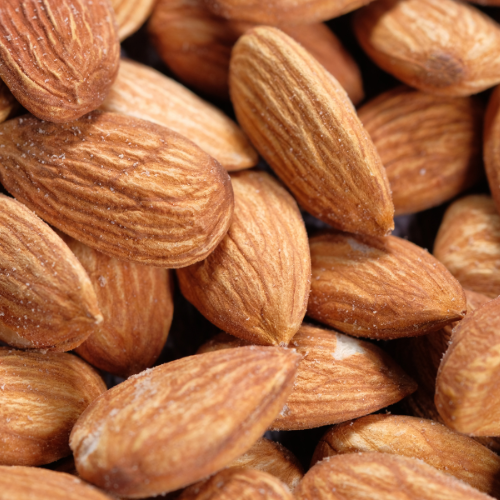
Almonds, known as Badam in India, are the edible seeds of the Prunus dulcis tree. Despite often being referred to as nuts, they are botanically classified as drupes, closely related to peaches and cherries. They are typically harvested when the outer hull splits open, revealing the hard shell containing the kernel (the “almond” we eat).
Almonds are highly prized for their versatile flavor profile, which is generally rich, earthy, and possesses a pleasant, subtle sweetness, especially when raw or lightly roasted. They have a satisfying, firm crunch and are consumed in various forms: raw, roasted (dry-roasted or oil-roasted), blanched (skin removed), sliced, slivered, or ground into flour or butter.
Nutritional Powerhouse: Almonds are an excellent source of healthy monounsaturated fats, plant-based protein, and dietary fiber. They are also packed with a wide array of essential vitamins and minerals, including:
- Vitamin E: A powerful antioxidant that helps protect cells from damage.
- Magnesium: Important for muscle and nerve function, blood sugar control, and blood pressure regulation.
- Calcium: Essential for strong bones and teeth.
- Riboflavin (Vitamin B2): Plays a role in energy production.
- Phosphorus, Potassium, Iron, Zinc, Copper, Manganese.
Health Benefits: Regular consumption of almonds is associated with numerous potential health benefits:
- Heart Health: May help lower “bad” LDL cholesterol and increase “good” HDL cholesterol due to their healthy fat and antioxidant content. They also support healthy blood pressure.
- Blood Sugar Control: Their low glycemic index, fiber, and magnesium content can help regulate blood sugar levels, making them beneficial for individuals with diabetes.
- Weight Management: Despite being calorie-dense, their protein and fiber content promote feelings of fullness, which can help in appetite control and weight management.
- Brain Health: Nutrients like riboflavin and L-carnitine may support cognitive function and memory.
- Digestive Health: Fiber acts as a prebiotic, supporting beneficial gut bacteria, which can improve digestion and overall gut health.
- Bone Health: Calcium, magnesium, and phosphorus contribute to strong bones and teeth.
- Skin Health: Vitamin E and antioxidants nourish the skin, protecting it from oxidative stress.
Culinary Uses: Almonds are incredibly versatile in the kitchen:
- Snacking: A popular healthy snack, raw or roasted.
- Baking & Desserts: Used in cookies, cakes, pastries, energy bars, and traditional sweets (badam halwa, marzipan).
- Breakfast: Added to cereals, oatmeal, yogurt, and smoothies.
- Savory Dishes: Used in some curries (especially Mughlai cuisine for richness), gravies, pilafs, and as a crust for meats or vegetables.
- Plant-Based Alternatives: Ground into almond flour (a popular gluten-free alternative) or processed into almond milk and almond butter.